

We knew it was coming. Yesterday, OpenAI officially announced ChatGPT Health, a dedicated space within ChatGPT for health and wellness conversations, and opened the waitlist.
If you’ve been reading this newsletter, you know the backstory: OpenAI has been quietly leaning into health for a while now. They created HealthBench to measure model fitness for health questions. They gave ChatGPT’s health advice use case top billing in the GPT-5 launch keynote. And according to their own numbers, 230 million users ask ChatGPT health questions each week.
Now they’re making it official. And they want your medical records.
What is ChatGPT Health?
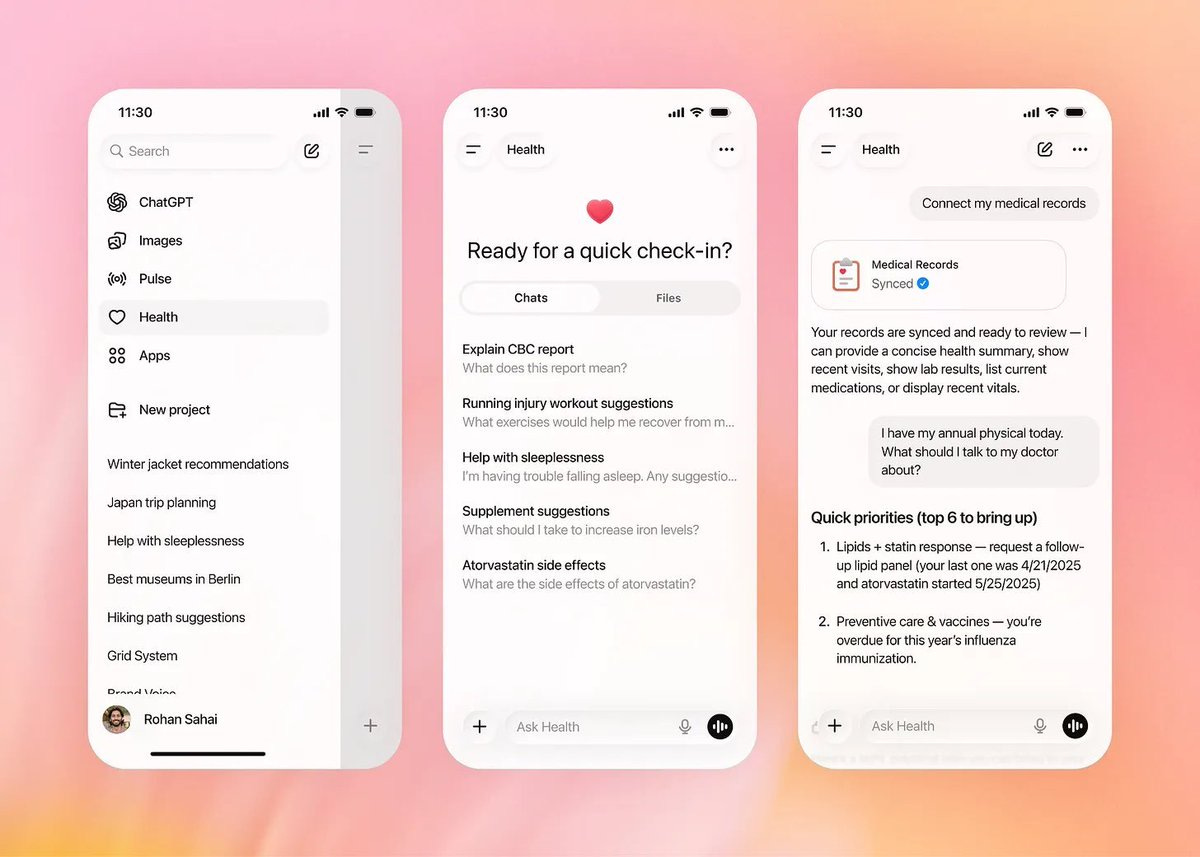
ChatGPT Health is a separate space in the ChatGPT sidebar designed specifically for health conversations. The key features:
Connect your health data. You can link medical records (EHR), Apple Health, and supported wellness apps so ChatGPT can ground its answers in your actual health information. The EHR integration is powered by b.well, which launched an SDK for health AI assistants just last month. Notably, Google also partnered with b.well back in October for personalized health features.
Privacy commitments. Health conversations, memory, and files are kept separate from regular ChatGPT and are “not used to train their foundation models.”
Designed to inform, not replace. OpenAI is positioning this as a tool to help you navigate medical care, not substitute for it.
Availability: Web and iOS (Android coming soon). EHR integration is US-only and requires you to be 18+. Open to Free, Go, Plus, and Pro plans (not in EEA, CH, or UK). You can join the waitlist here.
Why this matters
This is the first time a major AI lab has built a first-party, dedicated health product around their frontier model. Yes, there are healthcare AI startups. Yes, people have been hacking together health workflows with ChatGPT for years (guilty). But this is different.
OpenAI is staking out a position: We know you’re using this for health. We’re building for that.
What I’m curious about
Can I see my health records? How much visibility will users have into the records that ChatGPT ingests, and the format in which they are stored?
Does it just work for the primary user? The promo video highlights use cases of managing family health.
Will this push other labs to follow? Google and Anthropic have been notably quiet on health-specific products. HealthBench scores don’t appear in Gemini or Claude system cards. Does ChatGPT Health force their hand?
Regulatory implications? OpenAI is walking a fine line here. They’re careful to say this is for “navigating” care, not providing it. But 230 million weekly health queries is a lot of de facto medical consultation happening outside any regulatory framework.
Looking forward to getting hands on.
Other news this week
Speaking of regulations... The FDA released two guidance documents this week clarifying that low-risk wellness software - including certain wearables - intended “for maintaining or encouraging a healthy lifestyle” is not considered a medical device. Good news for patient-facing AI tools focused on wellness. AHA
HHS wants your input on healthcare AI. The feds published a Request for Information asking the public how HHS can accelerate AI adoption in clinical care. They’re seeking feedback on regulation, reimbursement, and R&D priorities — and comments are due in late February. If you have opinions on how AI should be paid for and governed in healthcare, now’s your chance.
Utah greenlights AI prescribing. The state partnered with Doctronic to pilot autonomous AI for prescription renewals in chronic conditions, the first state-approved program allowing AI to make medical decisions without a doctor in the loop. Politico
2026: The year of AI benchmarks? Fierce Healthcare predicts a marketplace of third-party benchmarks for healthcare AI is coming, as the industry moves from hype to accountability. Fierce Healthcare