

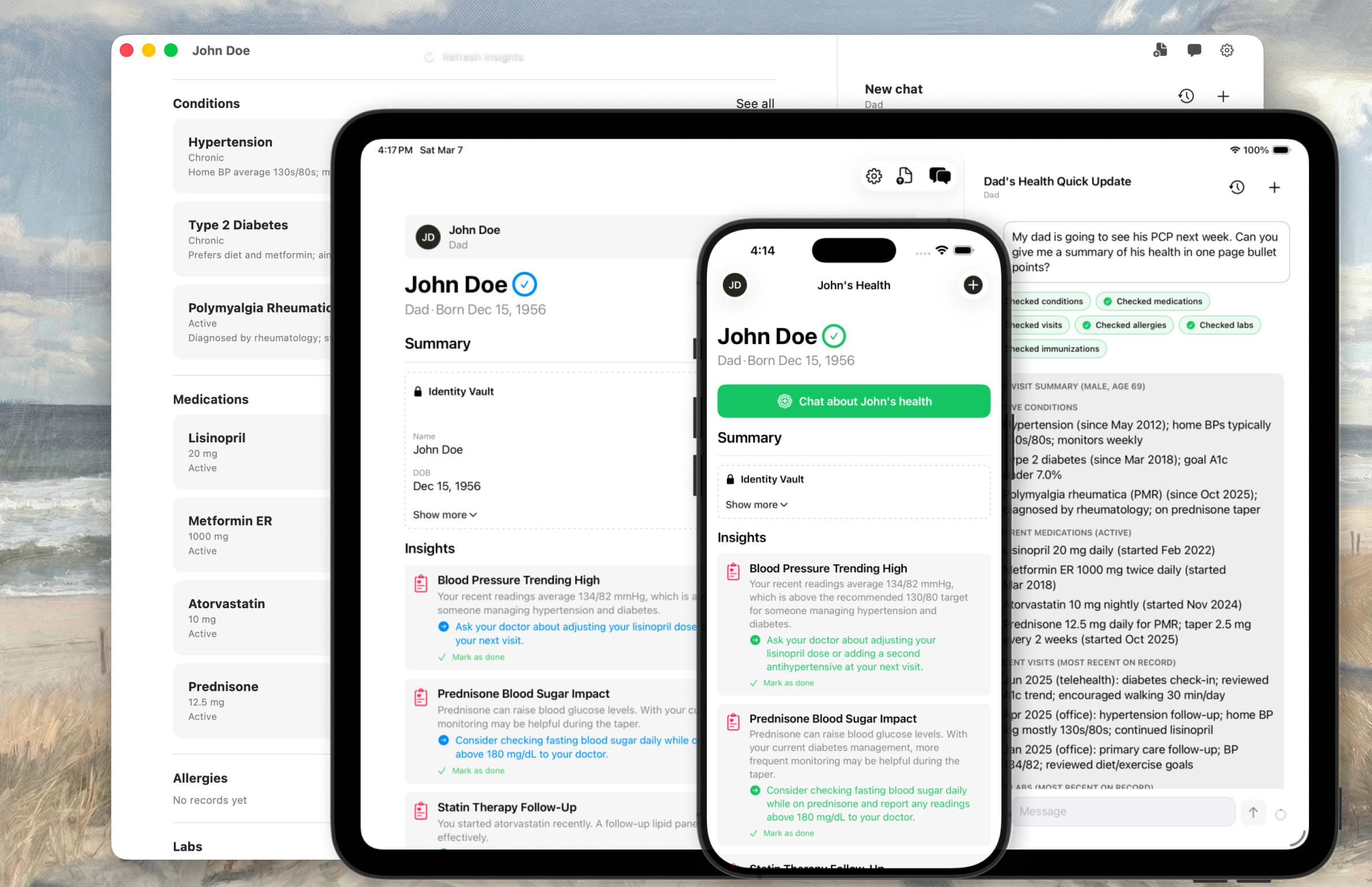
Available.Health, a personal healthcare agent built by yours truly is available on the Mac. As you already know from this newsletter, I’m optimistic about the power AI gives people to improve their experience in a worsening health system. I’m building Available Health to close the biggest gaps that keep us from realizing that potential, starting with durable context through a unified longitudinal health record and industry-leading privacy and security measures with clear boundaries around PII and data retention. It’s early days, but we’ve already received encouraging feedback from a clinical pilot helping breast cancer survivors navigate the reconstruction process. More on that soon.
The Mac app is in public beta, iPad and iPhone apps in private beta coming later this month.
NY bill would ban AI responses in healthcare and other licensed fields. It’s hard to see this as anything other than rent-seeking and gatekeeping. Healthcare is already in crisis, and bills like this make access and affordability worse by pushing people back into the same bottlenecks: coverage constraints, long wait times, and too few clinicians. The New York Health Foundation estimates that 4.7 million New Yorkers live in Primary Care Health Professional Shortage Areas. [NY Health Foundation]
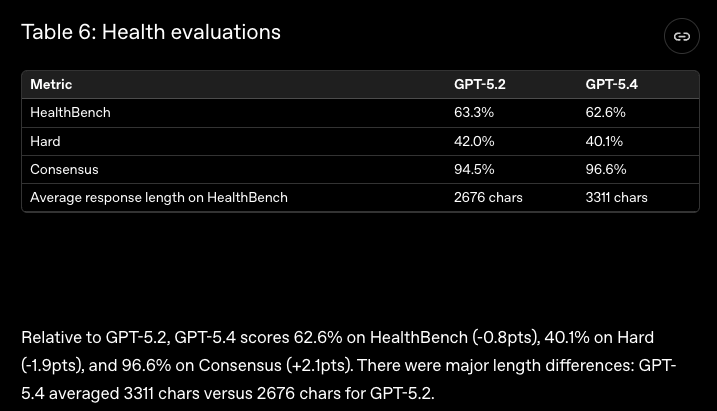
OpenAI’s GPT-5.4 Thinking release looks strong for agentic use, but it is not a step forward for healthcare by OpenAI’s own HealthBench metric. Results on both HealthBench Consensus and the HealthBench Hard track come in slightly below GPT-5.2, and it is still unclear which model will back ChatGPT Health (which I still do not have access to).
Speaking of OpenAI, they’re fighting more battles in the arena of public opinion. They had a rough press cycle after announcing an agreement with the Department of War following Anthropic’s very public governmental feud, allegedly over principled objections to the AI use in autonomous weapons. It also doesn’t help that a study published in Nature found that ChatGPT Health under-triaged 52% of emergency cases. This is the latest in a long saga of mud pit knife fights that OpenAI and Anthropic are fighting over the reputational capital required to own the consumer’s relationship with AI, including their health needs.
Google releases Gemini 3.1 Pro: no benchmarks related to healthcare seem to be publicly available for this model from their official releases. Which is interesting because…
Quest Diagnostics announced they are using Gemini models for their new AI companion to help customers better understand lab results.
FDA granted breakthrough status to RecovryAI’s generative AI chatbot for patient-facing post-op guidance that helps people participate more actively in their recovery. This signals the agency’s attitude of cautious optimism towards the use of patient-facing AI.